
I have had the privilege of working at a men’s mental health charity for over a year. I expected to work with anxiety, depression, relationships, loss and all the other things that bring people to counselling.
But there is one question that seems to sit underneath so much of my work with men:
“Who am I?”
More specifically, sometimes: “Who am I, as a man?”
It sounds like a simple question. I’m not sure it is anymore.
Men seem to be surrounded by conflicting messages. The traditional image of the strong, stoic provider hasn’t completely disappeared, but alongside it is a newer message: be open, talk about your feelings, be sensitive and emotionally aware.
But not too sensitive. Not too emotional. Be strong, but don't be controlling. Be confident, but don't be intimidating. Be vulnerable, but somehow remain masculine while doing it.
Where exactly is the line?
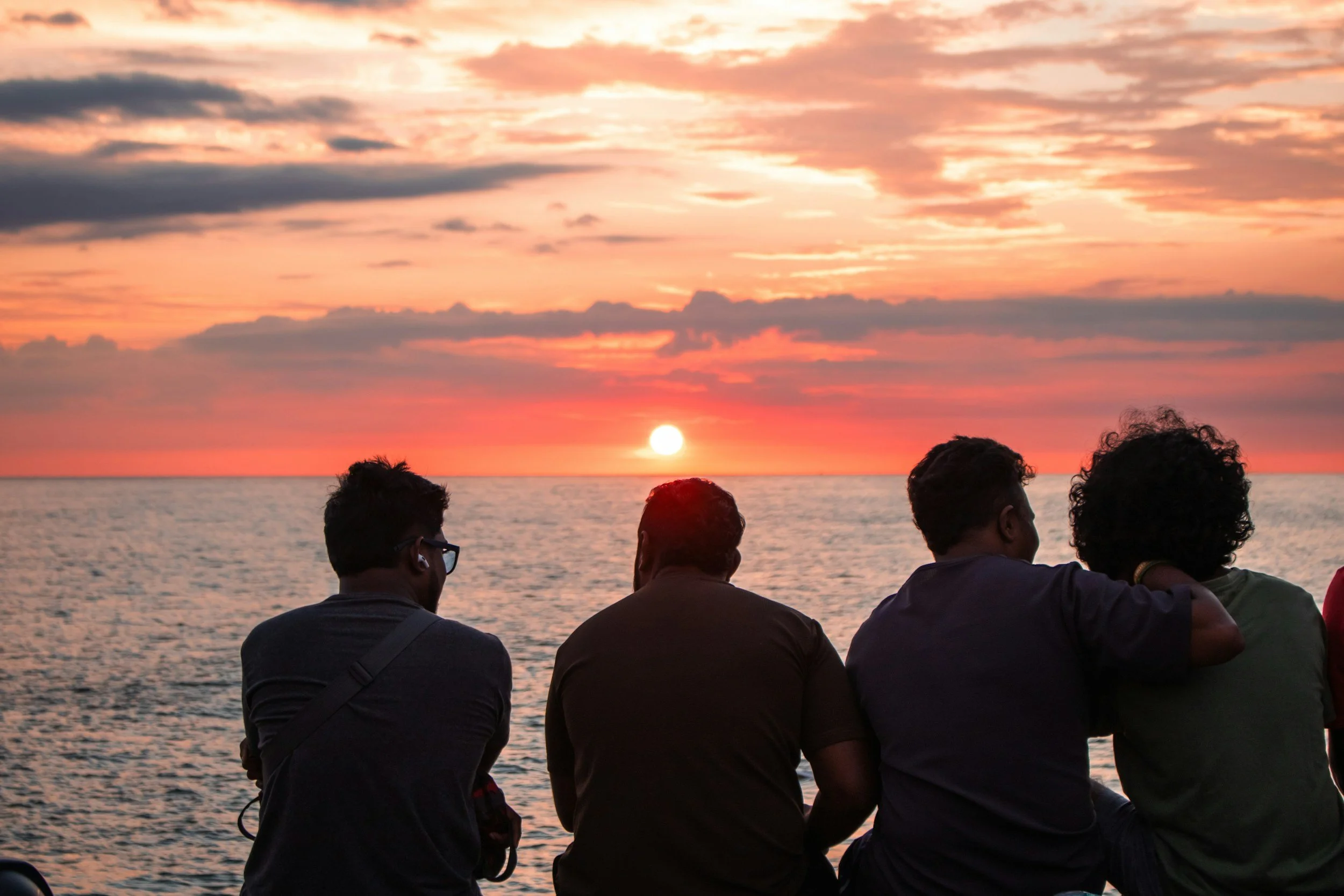
I have asked men that I know what they think “being a man” actually means. The answers are often surprisingly difficult for them to give.
One described some men today as being “rudderless.”
That word stayed with me.
His feeling was that masculinity has changed, and perhaps it needed to change, but we haven't necessarily replaced the old expectations with anything particularly clear. Some men know what they don't want to be, but aren't quite sure what they are supposed to be instead.
And when you don’t get an answer for what the identity of a man should be, you go looking for one.
That made me think particularly about younger men, boys, really—searching online for someone who seems certain. Someone who will tell them what strength looks like, what women want, how a man should behave and where they fit in the world.
It perhaps isn't surprising that some toxic online communities and influencers have been able to step into that space. Whatever else they offer, they offer certainty.
As the mother of boys, my message to them has always been very simple: “be yourself.”
But I also know it's easy for me to say that. They know my love is unconditional. It's the approval of the world outside our home that they will eventually have to navigate.
The reactions of friends, partners, teachers and peers will all give them little messages about what parts of themselves are acceptable. What happens when they cry? When they're frightened? When they're angry? When they're gentle? When they stand up for themselves?
All of those experiences gradually contribute to their understanding of what it means to be a man.
What about anger?
Anger comes up frequently in my work with men.
And it's a difficult emotion because anger and aggression are so easily confused.
Anger itself isn't wrong. It's a normal human emotion. It can tell us that we've been hurt, that a boundary has been crossed, that something feels unfair or that we've had enough.
But some men seem almost frightened of their own anger. They don't want to be seen as aggressive or threatening. At the same time, they may have grown up learning that strength means being dominant, keeping control and never appearing weak.
So what are they supposed to do with all that emotion?
Exercise, the gym, running, boxing and other physical outlets can be incredibly useful. But they can't be the only answer. You can't always go for a run in the middle of an argument.
Sometimes a man needs to be able to say:
“I'm angry.”
“That hurt me.”
“I'm frightened.”
“I don't know what to do with what I'm feeling right now.”
And perhaps that's where we still have some work to do.
We still hear phrases such as “man up” and “grow a pair”, often without giving them much thought. But underneath those throwaway phrases is still an old message: whatever you're feeling, push it down and be stronger. Be a man!
Then we wonder why some men struggle to talk.
I've worked with men who grew up with very strong ideas about masculinity. For some, there was an “alpha” father figure where gentleness, uncertainty or vulnerability were seen as weakness.
I remember working with one particularly gentle young man who had learned to respond to anxiety with aggression. Underneath it wasn't an aggressive person trying to get out. There was fear, uncertainty and a belief that being strong meant taking control.
He didn't need someone else telling him he was wrong.
He needed somewhere safe enough to work out who he actually was.
And perhaps that's the part of counselling I find most powerful.
I'm not there to tell a man what masculinity should look like. I'm there to be curious with him.
What does strength mean to you?
Does being in control have to mean being in control of somebody else?
Can you be frightened and still be brave?
Can you be gentle and still be strong?
What kind of man do you actually want to be?
Gradually, the inherited messages can be examined rather than simply obeyed.
Some can be kept.
Some can be changed.
And some can be left behind completely.
Perhaps men don't need another person telling them how to be a man. There are already plenty of voices doing that.
Perhaps they need more spaces where nobody is telling them who they should be at all.
Because underneath the expectations, the stereotypes, the anger and the pressure, I often find something much simpler.
A little boy who grew up.
Still trying to make sense of all the messages he received about what it means to be a man.
And perhaps wondering whether, after all of that, it's finally okay just to be himself.